SolarGAN

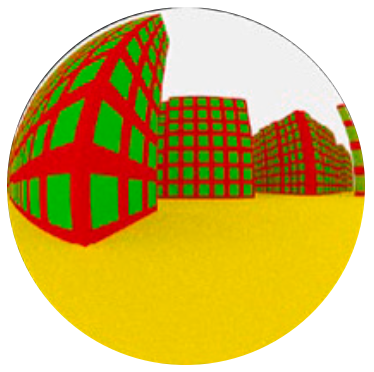
Assessing solar irradiance on facades is challenging due to complex urban features. SolarGAN helps by introducing a Deep Learning model that generates stochastic solar irradiance time series from simple fisheye images, offering a faster, data-driven alternative to labor-intensive simulations for robust BIPV energy system design.

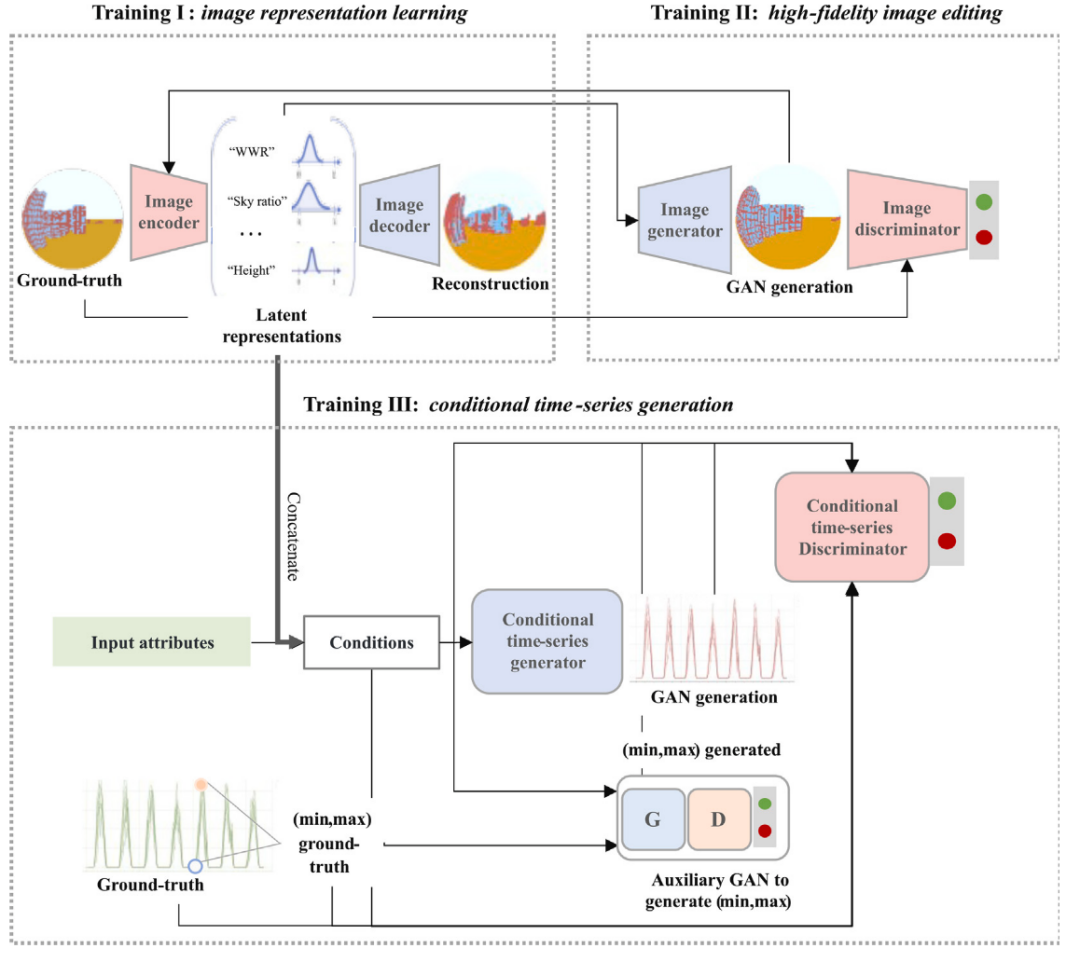
Illustration of the detailed model architecture and the entire training process in 3 separate stages. Lines and texts in red indicate the loss function terms involved. Source: Zhang et al. (2023)

Predicting solar potentials on facades

Tool Website:
>>> Rhino Grasshopper Tool, coming soon!

Corresponding Author:
- Yufei Zhang, yufei.zhang@epfl.ch

Publications:
- Zhang, Schlüter, Waibel (2023). "SolarGAN: Synthetic Annual Solar Irradiance Time Series on Urban Building Facades via Deep Generative Networks." Energy and AI 12 (2023) 100223. https://doi.org/10.1016/j.egyai.2022.100223
- Zhang, Waibel, Schlüter (2022). "Stochastic Solar Irradiance from Deep Generative Networks and their Application in BIPV Design." In: SBE-BERLIN-2022. IOP Conf. Series: Earth and Environmental Science 1078 (2022) 012040. DOI: 10.1088/1755-1315/1078/1/012040

Presentations:
- Waibel, C. "FCL Global Seminar: Data-driven Urban Science for Photovoltaics in Cities." [YouTube Link]

Rhino Grasshopper implementation

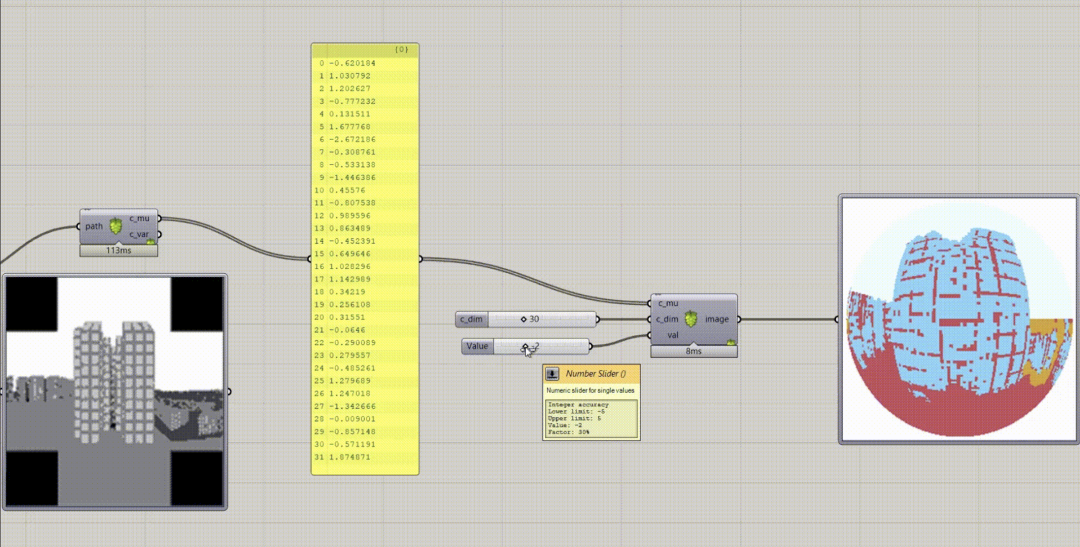
Grasshopper implementation

https://github.com/architecture-building-systems/SolarGAN (to be released soon)


GH Tool Development Team: Philip Schulz, Yufei Zhang, Christoph Waibel


Published 09. Oct 2024 (Updated 1 year ago)